DE • 302-494-8179

Emergency Storm Roof Repair Tips for Homeowners
- 10+ Years Experience
- Honest, Reliable, Quality Work
- Family Owned and Operated
Contact Us Today for a Free Estimate
"*" indicates required fields
Be Prepared for Storm Damage and Roof Repairs
Severe storms often strike without warning, leaving homeowners searching for fast ways to protect their property. Securing your roof quickly keeps your home dry and safe after high winds or heavy rain. J.W. Tull provides expert storm damage roof repair for families across Delaware, Pennsylvania, New Jersey, and Maryland. Professional teams arrive on-site to identify leaks and apply sturdy patches before moisture can enter the structure. Residents can trust high-quality materials and local expertise to restore their peace of mind. Fixing small issues now ensures a strong, resilient roof for the future. Explore our best suggestions for immediate fixes to prevent water damage.
First Steps to Take After Storm Damage
Swift action protects your home and keeps the repair process simple. Our team guides homeowners through the first step that stabilizes the roof and sets clear next moves. Start with safety, then check what you can from the ground and inside, and record what you see for the insurer. Quick measures help prevent water intrusion and expedite scheduling for emergency storm-damage roof repair. Every step below keeps you focused and calm. You get practical tasks that safeguard the property and help our crews arrive prepared to work:
Prioritizing Safety Before Inspecting Your Roof
- Stay Clear of Hazards – Keep family and pets away from downed branches, loose shingles, or any area that looks unstable. Call professionals before approaching the roof so the area stays safe and under control.
- Shut Off Power in Affected Areas If Needed – If water reached light fixtures or attic wiring, turn off power to that zone at the breaker. Wait for a licensed pro to confirm safe restoration.
What to Look for From the Ground and Inside the Home
- Scan From the Ground With Good Lighting – Look for missing shingles, lifted flashing, bent gutters, or debris on the roof. Use binoculars or a zoomed phone camera to avoid climbing.
- Check Attic and Ceilings for Moisture – Look for damp insulation, water rings, and soft drywall. Place buckets under active drips and lay towels to protect the flooring.
Documenting Roof Damage for Insurance Purposes
- Capture Clear Photos and Short Videos – Take wide shots of the roofline and close-ups of problem areas, then time-stamp the files on your phone. Photograph interior spots that show moisture or staining.
- Create a Simple Damage Log – Note the date, time, and what you observed in each area of the home. Save receipts for tarps, buckets, or temporary supplies to support your claim.
Areas of the Roof Most Vulnerable After a Storm
Strong storms put pressure on several key points of a roof, and these spots take the brunt of wind, rain, and flying debris. Our team pays close attention to each area because early action prevents water from settling into the structure. A clear understanding of these trouble points supports faster emergency storm repair and roofing, and keeps the home protected while full repairs are scheduled. Homeowners can spot issues from the ground or inside the home, and these early observations make it easier for our crew to arrive ready to secure the roof:
Shingles, Flashing, and Roof Penetrations
- Shingles Loosen When Wind Lifts the Edges – Once a section shifts, rain can travel beneath it and reach the roof deck. Crews carefully check the layout to identify patterns that indicate where the wind hits hardest.
- Flashing and Roof Penetrations Need Close Attention – These areas often shift from strong gusts or fast temperature changes. Our team quickly reinforces them to prevent water from entering small openings.
Roof Valleys and Low Slope Sections
- Roof Valleys Guide Heavy Water Flow – Storm debris collects here and slows drainage, which increases surface moisture. Our crews clear this space to support steady water movement.
- Low Slope Areas Face More Pooling – Water sits longer after a storm and moves toward seams or weak spots. Protective measures help direct runoff away from the home.
Gutters and Drainage Issues That Cause Water Backup
- Gutters Fill Fast During Strong Storms – Leaves and branches reduce water flow and push moisture back onto the roof edge. Clearing the system keeps water from moving toward the home.
- Downspouts Direct Large Amounts of Runoff – If they clog, water can reach fascia boards or drip into areas near the foundation. Our team confirms each section is open and secure.
When to Call a Professional Emergency Roofing Contractor
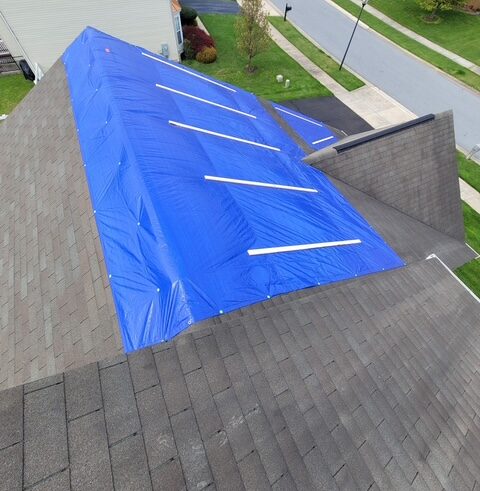
Knowing when to bring in a trained crew can protect your entire home. Emergency tarping and “dry-in” services stabilize the roof by sealing open sections, preventing water from reaching the interior while full repairs are arranged. A professional emergency inspection checks shingles, flashing, decking, ventilation, and drainage, giving a clear assessment of what needs immediate work. These steps support safe, effective emergency storm-damage roof repair and help prevent problems from spreading. The signs below show when temporary fixes no longer provide enough protection:
- Water Continues to Enter the Home – Moisture reaching ceilings or attic spaces shows that the surface has deeper structural openings. A professional should locate the entry point and secure the roof.
- Shingles or Flashing Being Shifting Again – Movement often signals weakened fasteners or damaged decking beneath the surface. Crews use proper tools to anchor these areas and prevent further issues.
- The Roofline Shows Uneven Sections or Sagging – A dip or bend indicates pressure on the roof deck that needs expert evaluation. Professionals confirm the structure’s stability before completing repairs.
- Wind Exposure Reveals Loose Materials – When more than one area lifts or cracks, the system needs a full inspection to determine the extent of the damage. Our team prepares a detailed plan to restore the roof.
Preventing Secondary Water Damage Inside the Home
Moisture from a storm can quickly spread once it reaches the attic or interior spaces, making protection of these areas a top priority. Strong insulation, safe electrical systems, and dry surfaces keep the home stable while roofing crews complete repairs. Fast cleanup helps prevent moisture from settling into wood, drywall, and flooring, supporting a healthier environment and lower long-term repair costs. Every step taken in these early moments helps shield the home from deeper structural issues:
- Protecting Attics, Insulation, and Electrical Systems Keeps the Home Steady – Wet insulation loses performance and traps moisture, so removing damp sections helps restore the attic space. Electrical components need careful attention to prevent corrosion or short-term strain.
- Reducing Mold Risk Starts With Removing Moisture – Dry air movement and steady ventilation keep surfaces from holding dampness. Early action prevents odors and helps the home maintain clean, healthy air.
- Fast Action Saves Thousands in Repairs – Water exposure spreads once it reaches interior materials, so removing moisture quickly keeps damage contained. Professional crews can secure the roof while homeowners handle simple indoor steps that support restoration.
Insurance Considerations After Storm Roof Damage
Storm damage brings several important steps for homeowners who plan to file a claim, and clear communication with the insurer keeps the process moving. Contact your insurance provider soon after the event, then share photos, videos, and notes taken before emergency work began. Insurers often request documentation that shows why temporary repairs were necessary, along with receipts for tarps, supplies, and professional services. Keeping a simple record of dates, actions taken, and contractor reports supports a straightforward review. These details help the adjuster understand the scope of the damage and approve the next phase of repairs.
Preparing for the Next Storm
Damaging storms can return quickly, so taking preventive steps helps the home stay protected through changing weather. Small improvements and routine checks make a major difference in how the roof handles wind, rain, and debris. Post-storm inspections give homeowners a clear picture of how the last system held up, while a simple action plan keeps everyone ready if conditions shift again. Homeowners who stay proactive gain faster access to storm damage repair services, and roofing crews can respond with the right tools and information. The points below outline practical ways to strengthen the home before the next round of weather:
Preventive Roof Maintenance That Reduces Emergency Risk
- Routine Maintenance Protects the Structure – Cleaning branches, removing debris, and rightening loose materials help the roof perform better in strong storms. Consistent care gives our team clean access points during service visits.
- Seasonal Checks Reveal Early Issues – Small cracks or lifted shingles show up long before major damage forms. Quick repairs keep the roof steady during heavy wind and rain.
Scheduling Post-Storm Roof Inspections
- Professional Inspections Confirm Your Roof’s Condition – Crews check shingles, valleys, flashing, and drainage systems for stress or hidden openings. These findings guide updates that improve long-term protection.
- Documentation Supports Future Planning – Photos and notes from each inspection help track changes over time. Homeowners gain a clear record that supports insurance and repair decisions.
Creating an Emergency Roof Repair Plan
- Planning Reduces Stress – Keeping tarps, gloves, and basic supplies on hand supports simple, temporary actions until help arrives. Posting important phone numbers in a visible place keeps communication easy.
- Discussing the Plan With Everyone in the Home Builds Confidence – Each person knows where supplies are stored and what steps to take when the weather changes. A clear plan supports smoother coordination with professional crews.
Final Thoughts: Acting Fast to Protect Your Home
Quick decisions keep water out and safeguard the structure. Temporary fixes buy time while crews plan permanent solutions that restore strength and value. Our team delivers clear guidance, steady communication, and workmanship that stands up to harsh weather. Reach out for storm damage roof repair that stabilizes the roof, stops leaks, and sets the stage for lasting repairs. Schedule an inspection, request emergency tarping, and secure your home with proven methods.